
Learn
What is ABA Therapy?
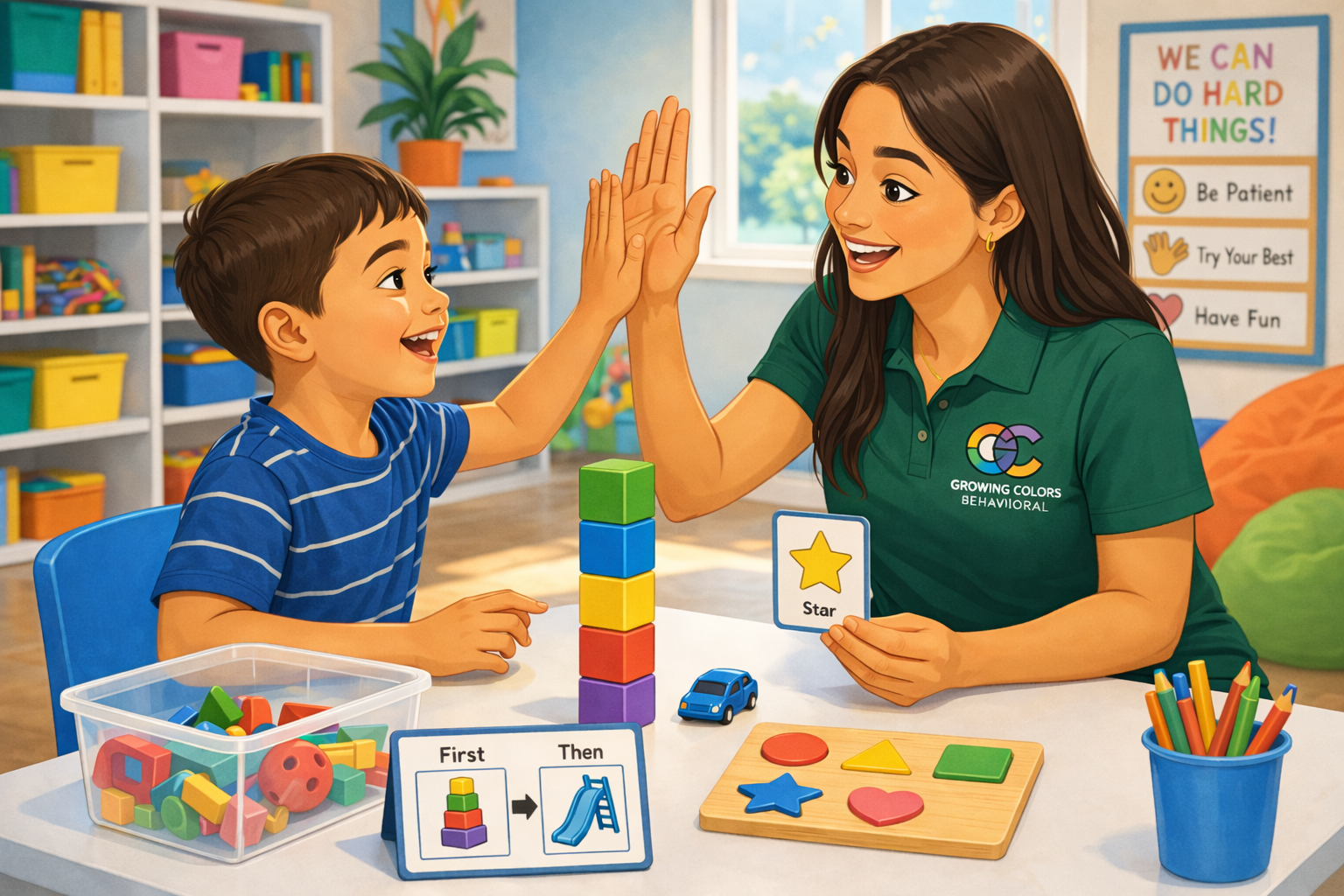
Applied Behavior Analysis (ABA) is the most extensively researched and evidence-based approach for supporting children with autism spectrum disorder. It uses the science of learning and behavior to build meaningful skills and improve quality of life.
How ABA works
ABA therapy works by identifying the factors that influence behavior and using structured, evidence-based techniques to teach new skills and reduce behaviors that interfere with learning and daily functioning.
Treatment is delivered by a Board Certified Behavior Analyst (BCBA), who designs and oversees the program, and Registered Behavior Technicians (RBTs), who provide direct therapy under BCBA supervision. Together, they implement a highly individualized program built around the child's unique needs and family priorities.
Behavior is learned
ABA is based on the science of learning and behavior. It teaches new skills and reduces problem behaviors by understanding how behavior is influenced by the environment.
Individualized programs
Every ABA program is tailored to the individual child. Goals are based on a thorough assessment and reflect what will make the most meaningful difference in the child's daily life.
Data-driven
Progress is measured through ongoing data collection. BCBAs review data regularly and use it to adjust the program — ensuring therapy is always evidence-based and moving forward.
Family involvement
ABA works best when families are involved. Caregivers are trained to support their child's goals at home and throughout daily routines, extending the impact of every session.
What ABA addresses
ABA therapy targets a broad range of skill areas — whatever will make the greatest impact for each child.
Communication and language
Social skills and peer interaction
Daily living and self-care skills
Academic and learning readiness
Reducing challenging behaviors
Safety and community skills
Play and leisure skills
Emotional regulation
Independence across settings
Common questions about ABA
Common concern:
“ABA is only for young children”
The reality: ABA is effective across all ages. While early intervention is associated with strong outcomes, ABA can benefit children, adolescents, and adults.
Common concern:
“ABA is repetitive and robotic”
The reality: Modern ABA is naturalistic, play-based, and embedded in daily routines. The goal is meaningful, functional skill-building — not rote repetition.
Common concern:
“ABA tries to change who a child is”
The reality: Ethical ABA focuses on skills that improve quality of life — communication, safety, independence — not on suppressing personality or identity.
Ready to learn more?
Contact us to talk about how ABA therapy can support your child's development.